

Slingshot Bio
Roboto converged Slingshot Bio's WordPress and Shopify sites into one headless Shopify build on Next.js and Sanity, instrumented end to end and AI-ready.
View case study
The process
First we check the existing Drupal and see whether the data is clean enough to move straight over to Strapi, and plan around any auth walls or bot protection in the way.
Then we work out how Drupal renders its pages and pull the content out, even without CMS access.
Everything extracted runs through our sanitization pipeline, which flags slop, normalizes structure, and leaves us clean content to work with.
Before anything moves, we agree the Strapi content model with you, shaped around how your editors actually work.
We transform the content to the agreed schema and run a full dry run, so mappings and edge cases prove out before production.
Once the dry run is clean, everything moves into Strapi in one controlled cutover.
Every old URL gets mapped to its new home with the right redirect, so rankings and link equity survive the move.
Finally, automated browsers sweep the new site for data issues, design regressions, and missing SEO signals.
Key pain points
Here's the uncomfortable truth about Drupal: it's powerful, but it demands a level of investment that most teams underestimate. The learning curve is brutal. We're not talking about a weekend of tutorials; we're talking about months before a developer is truly productive. Drupal 8 and beyond adopted Symfony patterns, which is great for architecture but means you now need a PHP developer who also understands dependency injection, service containers, and YAML configuration files that seem to multiply overnight. Finding and retaining Drupal talent is genuinely difficult, and the developer survey data confirms it: fewer than 10% of the community is under 30, and almost nobody is joining fresh.
The upgrade story has been a recurring nightmare. The jump from Drupal 7 to 8 was essentially a full rebuild, and the ongoing churn from PHP and Symfony upstream changes means your team spends a meaningful chunk of time just keeping the lights on. Module compatibility breaks, themes need reworking, and the update process still isn't fully automated. If you're on a lean team, that maintenance burden is going to eat into your feature development time.
And then there's the content editor experience. Drupal was built by engineers for engineers, and it shows. The admin interface is functional but far from intuitive, and content teams coming from friendlier platforms consistently struggle with it. You can improve things with contributed modules and custom configuration, but that's more time and money. If you don't have the budget for a dedicated Drupal team or a long-term agency partnership, you're going to have a bad time.
Punishing learning curve
Getting productive in Drupal takes months, not days. The combination of Symfony patterns, YAML configuration, and Drupal-specific conventions means onboarding new developers is slow and expensive.

Shrinking talent pool
The developer community is aging out. Fewer than 10% of Drupal developers are under 30, and new developers aren't joining at a rate that replaces those leaving. Finding affordable Drupal expertise is a real challenge.
Painful upgrade cycles
Between PHP version bumps, Symfony updates, and Drupal core changes, your team will spend significant time on maintenance that has nothing to do with shipping features. The Drupal 7 to 8 migration was so brutal they delayed end-of-life for years.
Poor content editor experience
The admin interface was designed by developers, and it shows. Content teams coming from WordPress, Sanity, or any modern CMS will find the editing experience clunky and unintuitive without significant customization.
Resource-hungry infrastructure
Drupal is not light. It demands proper server resources, caching layers, and database optimization to perform well. Cheap shared hosting won't cut it, and infrastructure costs add up quickly.
High total cost of ownership
It's open source, but don't let that fool you. Between specialized developers, hosting requirements, ongoing maintenance, and the sheer time investment to configure everything, Drupal projects consistently cost more than teams expect.
Key advantages
If you’re the kind of team that likes to get your hands dirty with real code instead of fighting a bloated enterprise UI, Strapi will feel like home. It’s open-source, customizable, and developer-centric. You get full access to the codebase, no licensing paywalls, and the freedom to shape your CMS exactly the way you want it.
It is flexible. You can use React, Vue, Angular, mobile apps, and smart displays to push content. And despite being dev-leaning, it still gives you GUI-based drag-and-drop schema generation, which means you can spin up content models fast without digging into JSON files every five minutes.
Node.js driven architecture
Built on Node.js, Strapi plugs straight into the modern JavaScript ecosystem. If your team already lives in JS-land, Strapi fits right in.
Easy frontend framework integration
Pick your poison React, Vue, or Angular. Strapi plays nicely with all of them, making it easy to ship content.
Highly modular approach
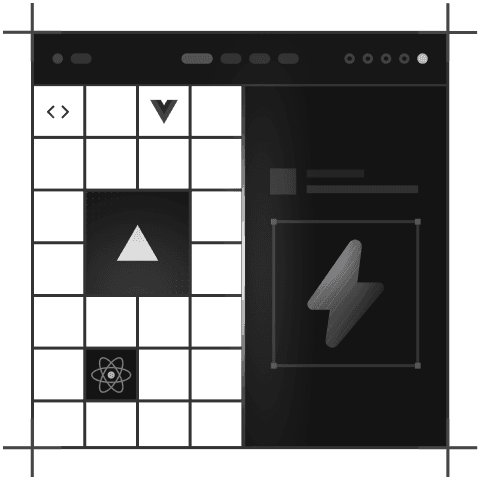
Every part of Strapi is built like Lego. Add what you need, remove what you don’t, and customize endlessly. It’s great if you love building your CMS exactly your way instead of wrestling with rigid templates.
RESTful API flexibility
Out of the box, Strapi generates clean REST APIs that are easy to consume, easy to extend, and easy to customize. Ideal for multi-channel content delivery without rewriting half your backend.
Supports GraphQL APIs
With its GraphQL plugin, you get structured queries, reduced over-fetching, and a nicer developer experience with zero hacking required.
Flexible content management
Strapi lets you model content however you want, from simple pages to complex, relational structures. Combined with a drag-and-drop schema builder, it gives teams full control without feeling boxed in.
Tell us what you're building. We reply within one working day. Jono or someone on the team picks up every message personally.
Join the growing list of successful migrations